
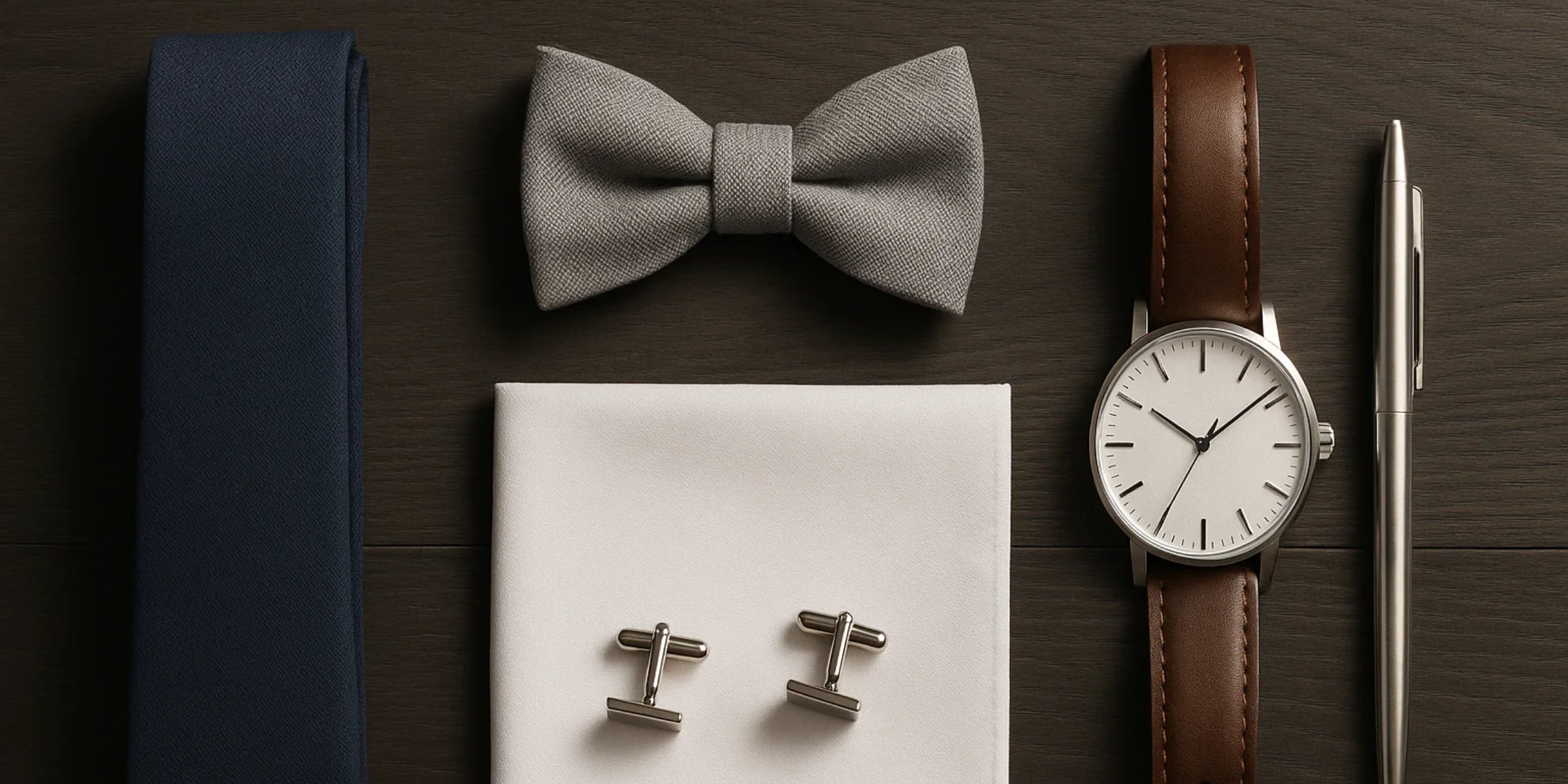
What costume accessories should you choose for a job interview?
During a job interview, every detail counts. While skills, experience, and preparation are essential, appearance plays a key role in the first impression given to the recruiter. A well-chosen suit already reflects a sense of professionalism, but it's often the accessories that add the finishing touch and demonstrate attention to detail. Tie, bow tie, pocket square, or cufflinks: these elements may seem secondary, but they help create a cohesive, elegant, and reassuring image. The goal isn't to stand out through eccentricity, but to demonstrate that you've mastered the dress codes of the professional world while asserting a polished personality.
In a context where competition is fierce and every interview can be decisive, matching accessories to your suit becomes a strategic asset. Recruiters subconsciously perceive rigor, organization, and self-confidence through clothing. A judicious choice of accessories thus helps reinforce your message, project a credible image, and highlight understated elegance. Materials, colors, and shapes must be carefully selected, taking into account the interview setting and the desired position. A position in a bank or law firm does not require the same stylistic approach as an interview in a communications agency or a creative startup.
This guide offers a breakdown of the most appropriate accessories for a successful job interview. We'll first explore why these sartorial details are so important, before exploring the best options for ties, bow ties, and other refined elements like pocket squares and cufflinks. The goal is to offer clear and practical guidelines for creating an elegant, understated, and professional outfit that will boost your confidence and win over your interviewer at first glance.
The importance of accessories for a successful interview
Costume accessories aren't just embellishments. They convey an intention and reinforce the image you want to project. During an interview, the recruiter not only looks at your manner of expression, but also at your consistency and mastery of your appearance. A well-thought-out outfit, complemented by carefully chosen accessories, sends a strong message: that of a rigorous candidate, attentive to detail, and respectful of the professional environment.
A suit without accessories can appear incomplete, even impersonal. Conversely, a well-knotted tie or a simple bow tie creates a focal point that draws the eye and emphasizes the elegance of the ensemble. Pocket squares and cufflinks, when used subtly, add a touch of refinement that stands out without ever being excessive. Balance is essential: too many flashy elements risk distracting from the message, while a measured choice reinforces credibility.
Accessories also allow you to adapt your outfit to the context. In a very formal setting, a satin polyester or plain cotton tie remains a safe bet. For an interview in a more creative setting, a linen or knitted bow tie can express a modern and assertive personality. Thus, accessories become tools of silent communication, capable of expressing seriousness, dynamism, or creativity depending on the choices made.
Finally, mastering colors and materials in accessories reveals an aesthetic sensibility that can be seen as an asset in many professions. Pairing a gray suit with a navy blue tie or a white pocket square illustrates a sense of harmony and sobriety. These details, although subtle, help build a positive and memorable image.
Choosing a tie suitable for a professional setting
The tie remains the most classic and expected accessory in a job interview. It embodies seriousness, rigor, and respect for dress codes. However, not all ties are suitable for this type of meeting. The choice must be made taking into account the color, material, and pattern in order to convey a professional and consistent image.
Subdued colors are preferred. Navy blue, charcoal gray, and burgundy are safe bets. These shades inspire confidence and stability, while remaining elegant. Overly bright colors or extravagant patterns should be avoided, as they risk distracting from the message. A job interview is not the time to experiment with bold combinations, but rather to demonstrate your ability to respect a formal framework.
When it comes to materials, cotton, satin polyester, or fine knit are all good choices. They guarantee a clean drape and a polished look. Linen, which is lighter, may be suitable for a summer interview, but it should be chosen in a discreet shade to maintain a professional appearance. The important thing is that the tie is well tied and perfectly fitted to the shirt and collar.
Patterns should remain subtle. Thin stripes, micro-patterns, or solid colors are best. They add a touch of personality without compromising the expected seriousness. On the other hand, overly bold or humorous patterns should be avoided. A well-chosen tie should complement the suit, not become the center of attention.
For a varied selection adapted to different professional contexts, you can consult our collection of ties , which offers elegant and sober models, perfectly suited to a job interview.
The bow tie as a stylish and modern alternative
While the tie remains the most popular option, the bow tie can be a modern and refined alternative. Long associated with special occasions, it has now become an accessory that asserts a polished and original personality, without breaking with the professional setting. When well chosen, it conveys an image of confidence and elegance, while allowing you to subtly stand out.
The bow tie, however, must be chosen with discernment. Plain models in muted tones like black, navy blue, or dark gray are particularly suitable for interviews. They maintain a classic look while adding a touch of distinction. For a slightly more creative setting, a linen or knitted bow tie can introduce a touch of modernity and dynamism, provided you stick to a discreet color palette.
Material plays a key role. Cotton and satin polyester offer a sleek, professional finish, while knitwear lends a more casual yet refined look. The key is to choose a bow tie that complements your suit and shirt to create a cohesive and balanced silhouette.
It's also important to consider size and shape. A bow tie that's too large may look inappropriate in a formal setting, while a bow tie that's too small loses its visual impact. The ideal is to find a balance that highlights the face without drawing undue attention.
To explore different interview-friendly options, you can discover our collection of bow ties , which offers elegant, understated and modern models, perfect for asserting a distinctive professional style.
Pocket squares and cufflinks for a refined style
While the tie or bow tie are the most visible accessories, the pocket square and cufflinks play an equally crucial role in the elegance of an outfit. Their subtlety makes them details that, although discreet, immediately reveal the care taken over one's appearance. In a job interview, they must be chosen with great care, as they can transform a classic suit into a refined and professional silhouette.
The pocket square, placed in the breast pocket of the jacket, is not intended to steal the show from the tie or bow tie. Rather, it should complement the ensemble with sobriety. White, beige, or navy blue are particularly suitable, as they add a bright touch without distracting from the look. Materials like cotton or linen are ideal, as they offer a clean and elegant look. It's best to avoid overly bold patterns or bright colors, which can appear too eccentric in a professional setting. A simple white pocket square folded in a classic manner demonstrates impeccable attention to detail.
Cufflinks, on the other hand, are often seen as a symbol of refinement and mastery of dress codes. They aren't essential, but when worn, they demonstrate careful attention to presentation. For an interview, the most suitable models remain silver or gold metal buttons with a simple, minimalist design. Simple geometric shapes, such as squares or circles, reinforce the impression of seriousness and stability. On the other hand, fancy or overly colorful models should be avoided, as they could distract the recruiter.
Choosing a pocket square and cufflinks should be done with consistency in mind. Harmony of colors and materials is essential to avoid a cluttered appearance. For example, a navy tie can be paired with a white pocket square and silver cufflinks, creating an elegant and professional balance. Similarly, a gray suit can be enhanced with a beige cotton pocket square and discreet cufflinks, for a look that is both understated and distinguished.
It's also important to remember that simplicity is always key in an interview. Accessories should not be seen as an attempt at seduction or ostentation, but rather as evidence of a sense of harmony and rigor. An excess of flashy details could give the impression of a lack of discernment, while a measured selection inspires confidence and professionalism.
To discover elegant and interview-friendly designs, you can consult our collection of pocket squares , as well as our selection of cufflinks , which offer refined and understated options, ideal for completing an interview suit.
Tips for harmonizing colors and materials with sobriety
Harmonizing colors and materials is one of the most important aspects when choosing accessories for a job interview. A well-tailored suit can lose its impact if the chosen accessories don't match each other. Conversely, a balanced combination of colors and textures immediately reinforces the impression of professionalism and stylistic mastery. The goal is to create a visual cohesion that inspires confidence and reflects a polished personality.
The colors to favor
During an interview, it's essential to opt for understated and elegant colors. Navy blue, gray, black, and burgundy are safe choices for ties and bow ties. These shades evoke stability, rigor, and maturity. Pocket squares can add a touch of subtle contrast, for example, a white pocket square on a dark suit. Bold colors like orange, yellow, or pink can only be considered in creative environments, and always in small touches so as not to appear over the top.
Color combinations should also respect a certain hierarchy. The tie or bow tie is usually the focal point, while the pocket square and cufflinks complement it. For example, a navy blue tie can be paired with a white pocket square and silver cufflinks, creating a sober and professional harmony. On the other hand, overdoing it with strong colors risks blurring the message and distracting from the message.
The choice of materials
Beyond color, materials play a key role in the impression made. Cotton and satin polyester offer a sleek, professional finish, ideal for ties and bow ties. Linen, being lighter, is suitable for summer interviews, as long as you stick to neutral shades. Knit, on the other hand, adds interesting texture and a modern look, but it should be used subtly to avoid appearing too casual.
Harmony between materials is also important. For example, a satin polyester tie pairs well with a cotton pocket square, creating a subtle yet elegant contrast. Similarly, a knitted bow tie can be paired with a linen pocket square for a refined and contemporary look. The key is to avoid overly disparate combinations that could create an unbalanced impression.
A few simple rules for successful harmonization
- Limit the number of strong colors to just one, complemented by neutral tones.
- Favor matte materials for a sober look, and reserve satin finishes for very formal contexts.
- Ensure that the accessories complement the costume without ever overshadowing it.
- Adapt choices according to the sector of activity: more sobriety in traditional environments, more freedom in creative circles.
By following these principles, each candidate can create a balanced and elegant outfit that reinforces their message and projects a professional image. The successful harmonization of colors and materials is not only a matter of aesthetics, but also a sign of rigor and discernment, qualities particularly appreciated by recruiters.
Conclusion: controlled elegance as an asset in an interview
A job interview isn't just about presenting a career path or highlighting skills. It's also a comprehensive communication exercise, where every detail counts to convince. Costume accessories play a decisive role in this self-presentation, as they reflect both respect for professional codes and the ability to cultivate one's image. A simple tie, a well-chosen bow tie, a discreet pocket square, or elegant cufflinks demonstrate rigor and particular attention that don't go unnoticed.
The key is balance. Too much originality can seem out of place, while too much sobriety can give the impression of lacking personality. The art, therefore, is finding the right balance, subtly harmonizing colors and materials. Neutral hues and elegant materials like cotton, linen, satin polyester, or knit allow you to create a cohesive and professional outfit. Each choice must be considered based on the industry, the position you're targeting, and the image you want to convey.
Beyond aesthetics, these accessories boost self-confidence. Feeling good about your outfit, knowing that every detail has been mastered, allows you to approach the interview with confidence. This confidence is reflected in your attitude, speech, and posture—all elements that help convince a recruiter. Accessories are therefore not just ornaments, but true allies for making a positive impression.
To explore stylish, interview-friendly options, you can check out our tie collection , which features understated, refined designs that are perfect for complementing a professional suit with distinction.